Cheam High Street bouquets for weddings local guide
Posted on 18/10/2026
Cheam High Street Bouquets for Weddings Local Guide
If you are planning a wedding near Cheam, the flower side of things can feel strangely big for such a small part of the day. One minute you are thinking about a bouquet; the next you are wondering about colour palettes, buttonholes, delivery timing, and whether everything will still look fresh by the time you walk down the aisle. This Cheam High Street bouquets for weddings local guide is here to make that easier. It focuses on what local couples actually need: how to choose wedding flowers that suit the venue, the season, the budget, and the feel of the day without getting lost in florist jargon.
Cheam has that pleasant mix of neighbourhood calm and everyday convenience, which is exactly why many couples like planning locally. You can compare styles, ask practical questions, and build a wedding flower plan that feels personal rather than packaged. Let's get into the useful stuff.
Expert summary: Start with your bouquet style, then build the rest of the flowers around it. Keep delivery, seasonality, and venue space in mind, and you will avoid most of the usual wedding-flower headaches. Simple, really. Not always easy, but simple.
Table of Contents
- Why Cheam High Street bouquets for weddings local guide Matters
- How Cheam High Street bouquets for weddings local guide Works
- Key Benefits and Practical Advantages
- Who This Is For and When It Makes Sense
- Step-by-Step Guidance
- Expert Tips for Better Results
- Common Mistakes to Avoid
- Tools, Resources and Recommendations
- Law, Compliance, Standards, or Best Practice
- Options, Methods, or Comparison Table
- Case Study or Real-World Example
- Practical Checklist
- Conclusion
- Frequently Asked Questions
Why Cheam High Street bouquets for weddings local guide Matters
Wedding flowers are not just decoration. They shape the first impression, photograph beautifully, and quietly hold the whole look together. A bouquet that suits the dress, the venue, and the season can make a wedding feel polished without being overdone. On the other hand, flowers that are too bulky, too fragile, or just the wrong colour can throw the balance off. You notice it in the photos. Guests notice it too, even if they do not know why.
That is why local knowledge matters. A Cheam High Street florist understands the practical rhythm of a local wedding day better than a generic online basket checkout. They know that a bouquet needs to survive travel, that some blooms cope better in warm rooms than others, and that a bride often wants the flowers to feel like an extension of the wedding rather than a separate afterthought. Truth be told, many people only realise this after they have seen a bouquet that drooped before the speeches.
Local wedding flowers also make planning easier in a very human way. You can talk through details, ask to see similar stems, and judge colour in natural daylight rather than through a screen. That matters more than people think. Soft ivory on a website can look very different in a sunny room near a cream wall with a bit of afternoon glare. Cheam couples who plan locally usually want confidence as much as convenience.
And if you are coordinating the full wedding flower set, not just the bouquet, it helps to think about the whole picture: bridal bouquet, bridesmaid bouquets, buttonholes, table pieces, corsages, and maybe a few gift flowers for family. A tidy local plan keeps that all aligned instead of pieced together at the last minute.
How Cheam High Street bouquets for weddings local guide Works
The basic process is straightforward, although weddings have a funny way of making straightforward things feel complex. You start with the style of the day, choose a flower direction, then build a package around the practicalities. If you are working with a local florist, the conversation usually moves through a few key stages.
1. Define the wedding style first
Before you talk about roses, lilies, hydrangeas, or mixed seasonal stems, decide what the day should feel like. Elegant and minimal? Soft and romantic? Bright, cheerful, and a little playful? This matters because bouquets are shape as much as flower content. A neat hand-tied bouquet says something different from a loose garden-style bouquet, even if they use similar blooms.
2. Match flowers to the venue and season
Cheam weddings can range from intimate local ceremonies to larger celebrations with formal dining rooms or relaxed reception spaces. A bouquet needs to suit the setting. Smaller venues often work better with lighter, less sprawling arrangements. Larger rooms can carry something fuller and more dramatic. Seasonality also plays a role. If you want blooms that are naturally available, your florist can usually steer you toward varieties that will look their best on the day.
3. Choose a colour family, not just one flower
Most couples start with a favourite flower and end up needing a broader colour plan. That is normal. A bouquet reads visually as a whole: white and green, blush and cream, berry and ivory, soft pastels, or richer jewel tones. For many weddings, a restrained palette feels more elegant than trying to include every favourite stem at once. A little discipline helps here, honestly.
4. Plan the supporting flowers
Once the bouquet is set, the rest is easier. Bridesmaid bouquets should sit comfortably beside it rather than compete with it. Buttonholes need to be small and secure. Table arrangements need to leave room for plates, glasses, candles, and conversation. If your florist offers a broader wedding range such as wedding flowers, that can help keep the whole look cohesive.
5. Confirm delivery and timing
Timing is one of the most overlooked parts of wedding flowers. A bouquet can be perfect and still cause stress if it arrives too early or too late. Local delivery, clear handover instructions, and a backup contact number all matter. You want the flowers to arrive fresh, securely packed, and ready to use. No one enjoys chasing a bouquet five minutes before the ceremony. Been there, avoided that, ideally.
Key Benefits and Practical Advantages
Working through Cheam High Street flowers locally brings a few advantages that are easy to overlook when you are comparing options in a rush.
- More personal guidance: You can discuss shape, colour, scent, and flower choices in a more detailed way.
- Better coordination: Bridal flowers, bridesmaid bouquets, and buttonholes can be planned as one set.
- Fresher handling: Local preparation and delivery reduce the chances of unnecessary stress during transport.
- Quicker decisions: It is easier to refine ideas when you can talk through samples and alternatives clearly.
- Better budget control: A florist can suggest where to spend more and where to keep things simple.
There is also a quieter advantage: peace of mind. If you know the florist understands local roads, local timing, and the practical pace of a wedding day, you can stop worrying about the flowers and focus on everything else. That is worth something.
For couples balancing wedding costs, there is usually a sweet spot between "simple but lovely" and "slightly more polished than expected." Local florists are often best placed to help you find it. A bouquet does not need to shout to look expensive; it just needs balance, freshness, and good design.
Who This Is For and When It Makes Sense
This guide is useful if you are in one of a few common situations.
- You are planning a local wedding in or around Cheam. You want flowers that suit the area, venue, and practical delivery needs.
- You want a bouquet with a personal feel. Not a template, not a last-minute panic order. Something tailored.
- You need more than a single bouquet. Bridal flowers, bridesmaid bouquets, buttonholes, and table arrangements all need to work together.
- You are comparing florist options. You want to know what to ask and what good service should look like.
- You are on a budget but still want quality. A thoughtful local plan can stretch the budget further than many people expect.
It also makes sense if you are not sure what style you want yet. That is more common than people admit. Brides sometimes arrive with one vague idea and leave with a clear plan after talking through seasonal stems, bouquet shapes, and how the flowers will sit against the dress. Grooms and family members, too, often just want reassurance that the flowers will look elegant and not feel over-fussy. Fair enough.
If your wedding is outdoors, in a warmer room, or running on a tight schedule, local planning becomes even more valuable. Some flowers are more robust than others. Some bouquets travel better. Some arrangements need special handling. A local florist can help you avoid the awkward bits before they happen.
Step-by-Step Guidance
Here is a practical way to plan wedding bouquets on Cheam High Street without getting overwhelmed.
- Set the bouquet brief. Decide whether you want classic, romantic, modern, or seasonal. Keep it to a few words if needed.
- Choose your key colours. Pick a main palette and one or two supporting tones. That keeps the design cohesive.
- Think about the dress and venue. A simple satin dress may suit a softer bouquet. A detailed venue may not need overly elaborate flowers.
- Ask what is in season. Seasonal flowers are often fresher looking and easier to source responsibly.
- Decide the bouquet size. A big bouquet can feel dramatic, but it should still be comfortable to carry for a long time.
- Add the supporting pieces. Bridesmaid bouquets, buttonholes, corsages, and table flowers should all feel part of the same family.
- Confirm delivery details. Check the time, location, contact person, and any access issues at the venue.
- Ask about care on the day. Even a few small tips, such as keeping bouquets cool before the ceremony, can help.
- Review final wording and order notes. Make sure names, times, and colours are correct. Tiny mistake, big inconvenience.
One practical detail people often miss: bouquets should be discussed with photography in mind. A bouquet photographed from above, from the side, and while being carried can look quite different. Ask your florist for a shape that works from more than one angle. It is a small thing, but it makes a difference.
And if you are using matching pieces, keep the descriptions simple. For example, a white-and-green bridal bouquet with smaller bridesmaid pieces, then neat buttonholes and table arrangements. The fewer mismatched decisions you make, the more polished the final result tends to feel.
Expert Tips for Better Results
Here are the bits that save stress later.
Choose a bouquet shape that suits your hands and dress
Some bouquets are wider and flatter, some are rounder, some trail a little. If you are wearing a fitted dress or carrying the flowers for a long ceremony, comfort matters. A bouquet that looks lovely but feels awkward is not a win.
Let one flower lead, not five
A bouquet often looks stronger when one flower type does the main work and everything else supports it. That could be roses, lilies, lisianthus, hydrangea, or a mixed seasonal blend. Trying to force too many "main" flowers into one design can make it feel busy.
Use texture to make simple flowers feel richer
Even a modest bouquet can look refined when different textures are layered well. Soft petals, small clustered blooms, and greenery create depth without making the bouquet heavy. This is where skill shows up, quietly.
Keep scent in mind
Some flowers are more fragrant than others. If the bride or close family members are sensitive to scent, say so early. It is a small detail, but the wrong scent choice can be a nuisance in a warm room.
Build the bouquet around the season, not against it
If you are set on a very specific bloom outside its natural season, expect more limits and less flexibility. A seasonal approach often gives better value and a more natural finish. In our experience, couples are often happier when they lean into what the season is already offering.
Ask for photos of similar work
This is not about demanding perfection. It is about seeing how a florist handles shape, colour balance, and scale. A few recent examples can tell you a lot more than a polished phrase ever will.
One little human note: people sometimes apologise for not knowing flower names. Please do not. Most couples know the feeling they want long before they know the Latin. That is normal. A good florist translates feeling into flowers. That is the job.
Common Mistakes to Avoid
Wedding flowers do not have to go wrong, but there are a few classic mistakes that show up again and again.
- Leaving flowers too late: If you start planning late, choice becomes narrower and stress goes up.
- Choosing too many competing colours: A bouquet with no clear palette can look unsettled in photos.
- Ignoring venue scale: A huge bouquet can overpower a small ceremony space, while tiny flowers can vanish in a large room.
- Forgetting transport and handover: Flowers need a clear arrival plan, especially on busy mornings.
- Mixing too many styles: Rustic, modern, classic, and tropical all at once can feel confused rather than creative.
- Not discussing allergies or sensitivities: This matters more than people think.
- Skipping care instructions: Even sturdy bouquets benefit from sensible handling before the ceremony.
Another mistake is focusing only on the bride's bouquet and leaving the rest to chance. Wedding flowers look best when the supporting pieces are considered early. Buttonholes and bridesmaid bouquets may be smaller, but they still need to match the tone of the day. Otherwise the visual story starts to wobble a bit.
And do not assume cheaper automatically means simpler in a good way. Sometimes the cheapest option is actually the most limited in flexibility, freshness, or finish. Better to understand what is included and where the value really sits.
Tools, Resources and Recommendations
You do not need specialist software to plan wedding flowers, but a few simple tools help keep things organised.
- A mood board: Save examples of bouquet shapes, colours, and styles you actually like.
- A simple wedding schedule: Note ceremony time, venue access, delivery window, and photography slots.
- Dress and venue photos: These help the florist judge scale and style.
- A guest and wedding party list: Useful for buttonholes, corsages, bridesmaid bouquets, and extras.
- A budget range: Even a rough figure helps the florist suggest realistic options.
If you want to explore bouquet styles online from the same local range, pages such as bridal bouquets, bridesmaid bouquets, buttonholes, and table arrangements can help you compare the different pieces that make up a full wedding order. The useful bit is not just seeing the flowers. It is seeing how they sit together as a set.
If you are comparing styles, it can also help to look at a curated wedding range like a dedicated wedding collection or broader options such as formal wedding collections. Even if you do not choose one exactly as shown, it gives you a structure for talking about shape and tone. That saves a lot of back-and-forth.
For delivery and practical service questions, the site's delivery information, flower care guidance, and guarantees are worth checking before you place an order. Not glamorous, maybe, but very useful.
Law, Compliance, Standards, or Best Practice
Wedding flowers are not heavily regulated in the way some services are, but there are still sensible standards to follow. Good floristry practice should include clear order details, honest product descriptions, reasonable delivery expectations, and safe handling of fresh flowers. If you are ordering for a wedding, clarity is your friend. So is written confirmation of the main details.
It is also wise to think about the practical side of freshness and transport. Flowers are perishable goods, and UK consumer expectations generally recognise that floral items need proper handling and timely delivery. That means you should check the florist's delivery conditions, replacement or refund policy, and any limits around same-day or next-day service. If a bouquet is being delivered for a ceremony, the timing needs to be realistic. Tight, but realistic.
If you are ordering from a local florist, review the website pages covering returns and refund guidance, terms and conditions, and privacy policy. That does not mean you expect problems. It means you are being sensible. Weddings are stressful enough without guessing the fine print later.
Best practice also means being clear about any venue rules. Some places have restrictions on confetti, candle placement, access times, or what can be dropped off when. A florist cannot solve every venue rule for you, but they can help shape the flower plan around them. A bit of coordination now saves a lot of shrugging later.
Options, Methods, or Comparison Table
There is no single right way to choose wedding bouquets. The best option depends on budget, style, and how much support you want from the florist. Here is a simple comparison that may help.
| Option | Best for | Strengths | Possible drawback |
|---|---|---|---|
| Fully bespoke bouquet | Couples wanting a personal, tailored design | Highly flexible, matched to dress and venue | Usually takes more planning and discussion |
| Seasonal florist-led bouquet | Couples who want good value and fresh-looking flowers | Practical, often more natural, usually easier to source | You have less control over exact stems |
| Matching wedding collection | Couples who want a cohesive look with minimal fuss | Simple to coordinate bridal, bridesmaid, and buttonhole flowers | Less room for custom tweaks |
| Budget-conscious simplified bouquet | Smaller weddings or tighter budgets | Clean look, easier to manage, lower cost | Fewer premium flowers or decorative layers |
A lot of couples end up choosing a middle path. They want a bouquet that feels personal, but they do not need a fully custom floral concept from top to bottom. That is where local advice really earns its keep. You can keep the bouquet special without making the whole process more complicated than it needs to be.
If you prefer to browse by occasion or style, options such as luxury flowers, florist's choice designs, or even simpler ranges like budget-friendly flowers can help you judge where your wedding order sits in terms of spend and finish. Not every wedding needs the same level of flourish. Let's face it, some of the prettiest weddings are also the calmest.
Case Study or Real-World Example
Imagine a small local wedding with a late-morning ceremony and an afternoon reception in a nearby venue. The couple wants something elegant, not huge, and they are trying to keep things manageable. They like white, soft pink, and green, but they do not want anything that feels stiff or overly formal.
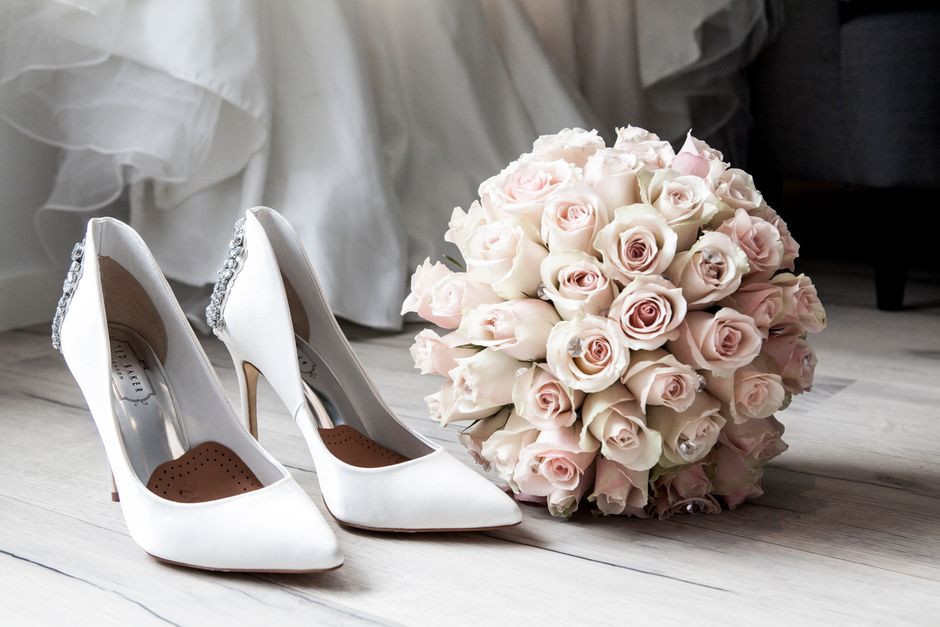
A practical local approach would be to build the flowers around a hand-tied bridal bouquet with a natural shape, then choose slightly smaller bridesmaid bouquets and neat buttonholes for the groom and close family. A few simple table arrangements would carry the same palette without cluttering the tables. The bouquet is the hero, but the supporting flowers keep the whole picture neat.
On the morning of the wedding, the flowers are delivered directly to the chosen address with a clear handover note. The bride's bouquet is kept cool and checked before the ceremony. The florist has already explained which blooms open more over the day, so the couple are not surprised when the bouquet looks even better in the photographs than it did when it first arrived. That is the kind of quiet win people remember.
Now, if the couple had tried to do this all separately-bouquet from one place, buttonholes from another, table flowers somewhere else-it would have been more likely to feel disjointed. Nothing terrible, just a little off. Coordinated local planning tends to avoid that. Small detail. Big difference.
Practical Checklist
Use this before you place the order.
- Have you chosen a clear bouquet style?
- Do you know your main colours and any colours to avoid?
- Have you shared the dress, venue, and wedding date?
- Have you thought about bridesmaid bouquets, buttonholes, and table flowers?
- Have you checked delivery timing and the exact handover location?
- Have you discussed scent, allergies, or any flower preferences?
- Do you know which flowers are likely to be seasonal and suitable?
- Have you reviewed care instructions for the flowers on the day?
- Have you checked the florist's payment details, contact details, and service information?
- Have you kept a written copy of the main order notes?
Quick takeaway: the best wedding flower plans are usually the ones that feel calm, clear, and coordinated. Not flashy. Not rushed. Just right for the day you are actually having.
Conclusion
Planning wedding flowers on Cheam High Street does not need to be overwhelming. Once you focus on style, season, scale, and timing, the choices become much easier to manage. A good bouquet should look beautiful, feel comfortable, and fit naturally into the rest of the wedding. That is the real goal. Not perfection for its own sake, but flowers that support the day and make it feel special in a way that lasts in memory and photographs.
Whether you want a classic bridal bouquet, matching bridesmaid flowers, or a full wedding set with buttonholes and table arrangements, the smartest move is usually the simplest one: start local, ask practical questions, and keep the design tied to your venue and season. You will end up with something more thoughtful, and probably less stressful too.
Get a free quote today and see how much you can save.
And if you are still deciding, that is fine. The right flowers have a way of becoming clear once the day starts to take shape.
Frequently Asked Questions
What should I look for in Cheam High Street wedding bouquets?
Look for fresh flowers, a shape that suits your dress and venue, clear delivery arrangements, and a florist who can explain what is in season. The best bouquets feel balanced rather than overcrowded.
How far in advance should I order wedding flowers?
As early as you reasonably can. Couples often start with initial ideas months ahead and confirm details closer to the date. The earlier you book, the more choice you usually have, especially for specific flower requests.
Can I get matching bridal, bridesmaid, and buttonhole flowers?
Yes, and it is often the easiest way to create a cohesive look. Matching pieces do not need to be identical; they just need to sit comfortably within the same colour family and style.
What if I only want a bouquet and not a full wedding package?
That is absolutely fine. Many couples only need a bridal bouquet, especially for smaller ceremonies. A good florist can tailor the order to exactly what you need without pushing extras.
Are seasonal flowers better for weddings?
Often, yes. Seasonal flowers are usually easier to source, tend to look fresh, and can offer better value. They also help the bouquet feel natural rather than forced.
How do I choose the right bouquet size?
Think about comfort, dress shape, and the scale of the ceremony. A bouquet should look noticeable but still be easy to carry. If in doubt, ask to see examples of small, medium, and fuller styles.
Do wedding bouquets need special care on the day?
Yes. Keep them cool, handle them gently, and follow any care guidance the florist gives you. Even robust bouquets can suffer if they are left in heat or handled too roughly.
Can I request specific flowers for my bouquet?
Usually yes, but availability depends on season and supply. If you have must-have flowers, mention them early so the florist can say what is realistic and suggest close alternatives if needed.
What is the difference between a bridal bouquet and a bridesmaid bouquet?
The bridal bouquet is usually the main focal piece and may be larger, more detailed, or more distinctive. Bridesmaid bouquets are often smaller and designed to complement the main bouquet rather than compete with it.
How do I make sure my flowers arrive on time?
Give the florist the correct delivery address, venue access details, and a reliable contact number. It also helps to agree a clear delivery window and one person responsible for receiving the flowers.
Are local Cheam florists a good option for wedding flowers?
Local florists are often a very practical choice because they can offer more direct communication, easier coordination, and a better understanding of local delivery timing. That can make the whole process feel much calmer.
What should I ask before placing a wedding flower order?
Ask about flower availability, delivery timing, care instructions, payment, and what happens if something needs to change. A few practical questions at the start can save a lot of confusion later.